App-based delivery work has become an option for people seeking flexible earning opportunities in many parts of the world.
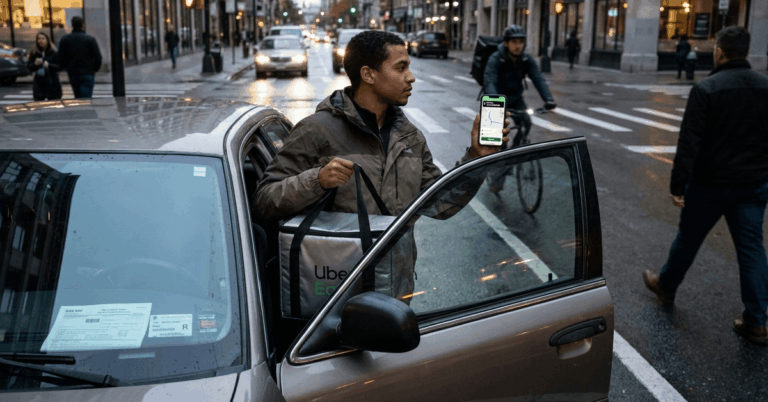
Uber Eats delivery roles may allow eligible couriers to make deliveries using a bicycle, scooter, motorcycle, car, or another locally supported method.



The experience is not identical everywhere. Vehicle requirements, onboarding procedures, payment structures, insurance rules, taxes, and worker classifications vary between countries and cities.
This guide explores the main types of Uber Eats delivery roles, common requirements, potential advantages and challenges, and what new applicants should check before registering.
Understanding Uber Eats Delivery Roles
Uber Eats connects customers with restaurants and other participating merchants through its delivery platform. Couriers collect eligible orders and transport them to the delivery location provided through the app.
The exact working arrangement depends on the market. Local laws and platform policies can influence everything from available vehicle types to how couriers are classified and paid.
Delivery opportunities are also location-dependent. Uber Eats may operate in one city while offering different services or no courier registration in another.
Types of Uber Eats Delivery Roles
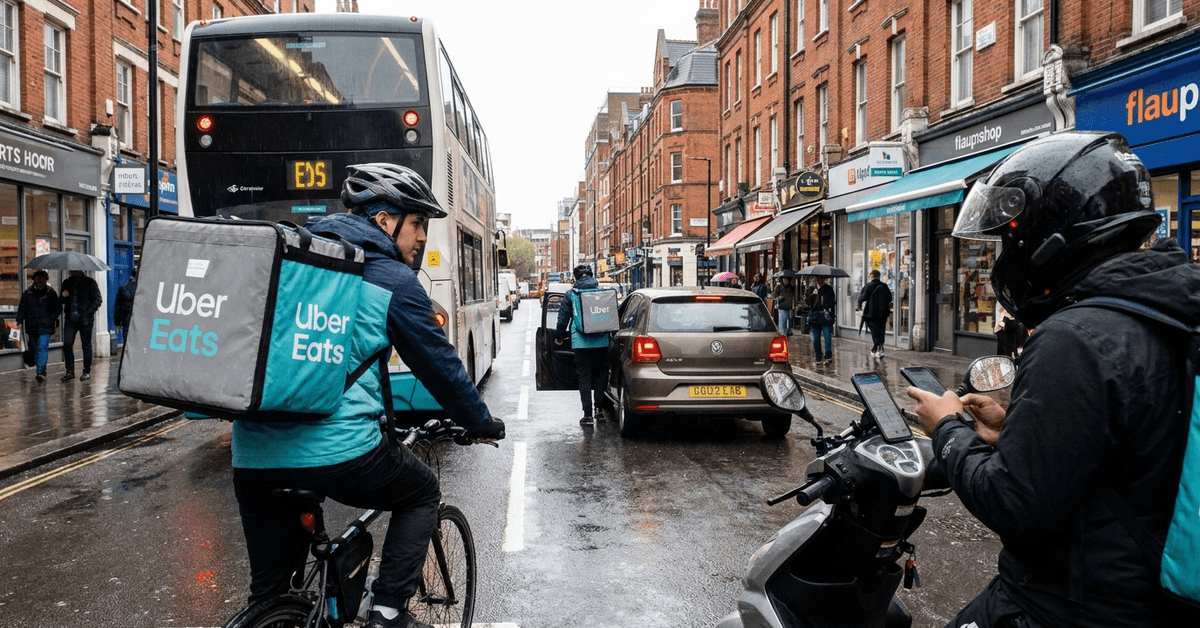
Several transportation methods may be supported depending on the country and city. Each option involves different expenses, documentation, travel distances, and practical considerations.
Applicants should verify their available delivery methods directly through Uber before purchasing equipment or making other financial commitments.
Bicycle Courier
Bicycle delivery can be a practical option in dense urban areas where cycling is permitted and supported by the platform.
A bicycle avoids fuel costs and may make navigating congested streets easier. However, weather, terrain, physical demands, delivery distances, and local cycling infrastructure can affect the experience.
Requirements vary by location. Applicants should check local bicycle regulations and any equipment or safety requirements before beginning.
Scooter or Motorcycle Delivery Partner
Scooters and motorcycles can allow couriers to cover longer distances while remaining relatively mobile in busy areas.
The main consideration is that motorized vehicles usually involve additional requirements. Depending on the country, these can include a valid licence, vehicle registration, insurance, inspections, or other permits.
Fuel, maintenance, protective equipment, and insurance should also be included when estimating potential net earnings.
Car Delivery Partner
Car delivery can be useful in suburban areas, locations with longer delivery distances, or places where weather makes two-wheel transportation less practical.
Cars provide additional carrying capacity and weather protection but generally have higher operating expenses.
Fuel or charging, insurance, maintenance, parking, registration, and other costs can reduce take-home earnings.
Vehicle eligibility and insurance requirements should always be confirmed for the applicant’s specific location.
Why Consider Uber Eats Delivery Work?
One of the main attractions of app-based delivery is flexibility.
In markets where couriers can choose when to go online, delivery work may fit around studies, family responsibilities, another occupation, or personal commitments.
However, prospective couriers should not assume that the same level of flexibility exists worldwide.
Contracts, local employment laws, operating models, and platform policies can affect how the relationship works in each country.
Accessible Skills
Delivery work generally focuses on practical abilities rather than specialized professional qualifications.
Couriers need to follow pickup and delivery instructions, navigate their area, communicate appropriately when necessary, and handle orders carefully.
Familiarity with smartphone navigation and delivery apps can also be useful.
Vehicle-related qualifications may still be required when using a scooter, motorcycle, or car.
Different Vehicle Options
Another advantage in some markets is the ability to deliver without owning a car.
Where supported, bicycles, scooters, motorcycles, or other transportation methods may provide alternative ways to make deliveries.
This flexibility can reduce the initial cost for some applicants.
However, no vehicle type should be presented as universally accepted. Uber determines available delivery methods according to local conditions and requirements.
Flexible Scheduling
In many markets, eligible delivery partners can choose when to use the app and look for delivery opportunities.
This may make the work suitable for people interested in part-time or supplementary earning activity.
Actual order availability can fluctuate considerably.
Being online does not guarantee a specific number of deliveries or a particular amount of income.
Common Requirements for Uber Eats Delivery Partners
There is no universal set of Uber Eats courier requirements applicable to every country.
Requirements can depend on the applicant’s location, age, transportation method, and local regulations.
Applicants may commonly be asked for:
- A valid government-issued identification document
- A compatible smartphone
- An eligible delivery vehicle or transportation method
- A valid driving licence when applicable
- Vehicle registration when required
- Appropriate vehicle insurance when required
- Work authorization or other legal documentation where applicable
- Tax, business, or regulatory information required locally
- Additional documents requested during Uber’s onboarding process
Applicants should rely on the requirements shown for their actual location rather than requirements published for another country.
How the Registration Process Works
Uber’s delivery registration process is largely digital in many supported markets.
Applicants generally begin by creating an account through Uber’s official delivery portal and selecting the delivery method available in their area.
The platform may request identification, vehicle documents, insurance information, or other materials.
Applicants may also need to complete identity verification, screening, or additional onboarding steps, depending on local requirements.
Activation time varies according to the market and individual application.
For this reason, applicants should not assume that registration provides immediate access to delivery requests.
Understanding Potential Earnings
Uber Eats delivery earnings vary significantly around the world.
Factors may include location, distance, delivery time, demand, local payment calculations, promotions, and the number and type of completed deliveries.
There is no universal Uber Eats hourly income that applies across markets.
Applicants should examine the current payment information provided for their location before estimating potential earnings.
Gross earnings should also be distinguished from net income after operating expenses and applicable taxes.
Demand and Busy Periods
Food-delivery activity may increase during common meal periods in many cities.
Weekends, events, weather, local consumer habits, and restaurant activity can also influence demand.
However, higher demand does not automatically guarantee higher earnings.
Courier availability, delivery distances, traffic, and the local payment model can affect the final result.
Promotions and Incentives
Uber may occasionally provide promotions or incentives to eligible couriers in certain markets.
These offers can vary by location, account, period, and eligibility.
Applicants should not treat promotional earnings as permanent or guaranteed.
The current details displayed in the Uber app or official platform should determine whether a particular promotion applies.
Customer Tips
Tipping availability and practices differ substantially between countries.
Where Uber supports in-app tipping, customers may choose to provide a tip after a delivery.
Tips should not be treated as guaranteed income.
Local tipping customs can also make their contribution to total courier earnings very different from one market to another.
Benefits of Uber Eats Delivery Roles
App-based delivery work can offer advantages for people whose circumstances fit the model.
Schedule Control
Where the local operating model allows it, couriers may have considerable control over when they go online.
This can make delivery work easier to combine with other responsibilities.
The precise level of independence should still be verified locally because employment classifications and contractual arrangements differ internationally.
App-Based Workflow
Delivery requests and related information are managed primarily through Uber’s technology.
The app can provide pickup information, delivery destinations, navigation support, and account-related information.
This reduces the need for a traditional workplace or fixed office environment.
Supplementary Earning Potential
Some people may use delivery work alongside another source of income.
Others may dedicate more time to delivery activity where local conditions support it.
Neither approach guarantees a particular financial result.
Prospective couriers should evaluate demand and expenses before depending heavily on delivery earnings.
Challenges to Consider
Flexible delivery work also comes with practical and financial responsibilities.
Variable Income
Delivery demand can change from day to day.
The number of available requests, delivery distances, traffic conditions, customer activity, and local competition can all influence earnings.
Anyone requiring highly predictable income should consider this variability carefully.
Vehicle and Equipment Costs
Couriers may be responsible for expenses associated with their chosen delivery method.
These can include fuel, electricity, maintenance, tyres, repairs, insurance, mobile data, parking, and safety equipment.
Tracking these costs is important when calculating actual take-home earnings.
Weather and Road Conditions
Delivery work often means spending substantial time outdoors or travelling on public roads.
Rain, heat, snow, traffic, and other conditions can affect both comfort and safety.
Couriers should follow local road regulations and use appropriate safety equipment.
Legal and Tax Responsibilities
The legal status of delivery couriers varies around the world.
Depending on the country and operating arrangement, couriers may be treated differently under employment, contractor, self-employment, tax, insurance, and social-security rules.
Applicants should never assume that rules from the United Kingdom, United States, Spain, or another market apply globally.
Local authorities may require registration, tax reporting, insurance, permits, or other documentation.
Anyone uncertain about these responsibilities should consult official government information or an appropriately qualified local professional.
Insurance Requirements
Insurance requirements depend heavily on vehicle type and jurisdiction.
Motorized vehicles may require specific insurance before they can legally be used for commercial delivery activity.
Ordinary personal vehicle insurance may not necessarily cover food delivery or commercial use.
Applicants should check their local laws, Uber’s requirements, and their insurer’s terms before beginning deliveries.
This is particularly important for car, motorcycle, and scooter couriers.
Delivery Equipment and Safety
Appropriate equipment can make delivery work safer and more practical.
An insulated delivery bag can help transport food appropriately, while cyclists and motorcyclists may need helmets, lights, reflective equipment, or other safety gear according to local regulations.
Weather-appropriate clothing can also be valuable.
Couriers should prioritize road safety rather than attempting to complete deliveries faster by taking unnecessary risks.
Managing Delivery Expenses
Understanding expenses is essential for evaluating whether delivery work is financially worthwhile.
A courier earning a particular gross amount may retain considerably less after paying for fuel, maintenance, insurance, taxes, and equipment.
Keeping records of both earnings and expenses provides a clearer picture of financial performance.
These records may also be important for tax purposes depending on local law.
Is Uber Eats Delivery Right for You?
Uber Eats delivery work may suit people who value flexible scheduling, independent activity, and app-based work.
It may be less suitable for those who require fixed hours, guaranteed income, or traditional employee benefits.
Employment protections and benefits differ depending on the local legal and contractual model.
Before registering, applicants should compare the opportunity with their personal financial needs, transportation costs, schedule, and local regulations.
Key Steps Before Getting Started
The exact onboarding journey varies internationally, but applicants can prepare by checking the requirements for their own market.
A practical process includes selecting a locally supported delivery method, gathering the required documentation, reviewing vehicle and insurance rules, and understanding applicable tax obligations.
Applicants can then create an account through Uber’s official platform and complete the requested verification steps.
Delivery activity should begin only after the account has been properly activated and all applicable legal requirements have been satisfied.
Where to Apply for Uber Eats Delivery Opportunities
The most reliable starting point is the official Uber delivery platform.
Applicants can use Uber’s website to determine whether delivery opportunities are currently supported in their country or city and review applicable requirements.
Third-party websites should not be relied upon for promises of guaranteed approval, guaranteed earnings, or shortcuts around Uber’s onboarding process.
EXPLORE UBER EATS DELIVERY OPPORTUNITIES →
Use Uber’s official delivery platform to review availability, requirements, and registration options for your market.
Final Considerations
Uber Eats delivery roles can provide flexible earning opportunities in supported markets, but there is no single worldwide courier experience. Vehicle requirements, onboarding, payments, worker classification, insurance, taxes, and delivery availability all vary by location.
The ability to choose when to deliver can be attractive, but order volume and earnings are not guaranteed. Couriers should also account for expenses such as fuel, maintenance, insurance, equipment, and taxes when evaluating potential income.
Before signing up, applicants should verify the requirements that apply specifically to their country and chosen transportation method. Relying on official local information helps avoid assumptions based on rules from another market.
For people comfortable with flexible, app-based delivery work, Uber Eats may be worth exploring where courier registration is supported. The official platform is the best place to check current availability and begin the appropriate onboarding process.